

Severe storms can leave behind far more damage than homeowners can see from the ground. Hail may bruise shingles without creating an immediate leak, wind can loosen flashing and siding, and falling branches may damage drainage systems or weaken nearby trees. In many cases, several parts of the property require attention at the same time, making it difficult to know which problem to address first.
Choosing qualified professionals is one of the most important parts of the recovery process. The right contractors can identify hidden damage, recommend appropriate repairs, document conditions for insurance purposes, and complete work in a safe and organized sequence. The wrong choice can lead to incomplete repairs, unnecessary expenses, warranty problems, or additional water damage months later.
Homeowners do not need to make every decision immediately. A careful approach that prioritizes safety, documentation, credentials, clear estimates, and communication can make the restoration process more manageable. Understanding what to look for before signing a contract can also help you separate experienced professionals from high-pressure companies attempting to take advantage of a stressful situation.
Document the Damage Before Authorizing Permanent Work

Your first priority after a storm should be safety. Avoid climbing onto the roof, walking beneath damaged trees, or entering areas where water is near electrical systems. A roof that appears stable from the ground may have loose materials, weakened decking, or slick surfaces that create serious fall hazards.
Begin by documenting the property from safe locations. Take wide photographs that show the full affected area, followed by close-up images of visible damage. Photograph shingles, siding, windows, gutters, downspouts, fences, landscaping, outdoor equipment, and any interior water stains. Include multiple angles whenever possible.
Contact your insurance company before approving permanent repairs. Your policy may require prompt notice, documentation, and an opportunity for an adjuster to inspect the property. Emergency work may still be necessary, but you should distinguish between temporary stabilization and complete restoration.
When contacting roofing companies, ask whether they provide written inspection reports with photographs. A useful report should identify the location, type, and severity of each problem. It should also explain whether the condition appears related to the recent storm or to age, installation defects, or prior wear.
Experienced roofers often inspect more than the visible surface. They may examine the attic, decking, ventilation components, flashing, vents, skylights, chimneys, and roof penetrations. Signs of damage can include:
- Bruised or fractured shingles
- Missing granules
- Lifted shingle edges
- Cracked flashing
- Dented vents
- Loose ridge caps
- Moisture around roof penetrations
- Soft or stained decking
- Wet insulation
- New attic odors
Be cautious if someone immediately promises that your insurance company will replace the entire roof before completing a thorough inspection. Contractors should document what they observe, not guarantee how an insurer will interpret the claim.
Create a master list of damage and update it as inspections continue. Storm-related problems sometimes become more noticeable after heavy rain, temperature changes, or removal of damaged materials. Keeping everything in one place can help you compare reports and avoid overlooking an important repair.
Verify Credentials, Insurance, and Local Experience
After a major storm, homeowners may receive calls, flyers, and door-to-door visits from contractors who have recently arrived in the area. Some may be qualified, but others may have little connection to the community and may be difficult to reach once the work is complete.
Hiring a local roofing contractor can offer practical advantages. A nearby professional is more likely to understand regional weather patterns, permitting procedures, building requirements, and material availability. Local businesses may also be easier to contact for warranty service or follow-up inspections.
Do not rely only on an insurance certificate shown on a phone or printed months earlier. Contact the insurance provider when necessary to confirm that coverage is active and appropriate for the type of work being performed.
Ask how long the company has operated under its current name. A long history does not automatically guarantee quality, but frequent business-name changes can make it difficult to research complaints, lawsuits, or warranty issues.
Established roofing contractors should be able to explain who will supervise the project, whether employees or subcontractors will complete the work, and how jobsite safety will be managed. When subcontractors are involved, confirm that they are also properly insured.
Online reviews can be helpful, but they should not be your only source of information. Look for patterns across multiple platforms. A single complaint may result from a misunderstanding, while repeated reports of missed appointments, property damage, poor cleanup, or unanswered warranty calls deserve closer attention.
Ask references specific questions, such as:
- Was the estimate accurate?
- Did the crew arrive when promised?
- Were changes explained before additional charges were added?
- Was the property protected during construction?
- Did the contractor clean up nails and debris?
- Were warranty concerns addressed promptly?
- Would the homeowner hire the company again?
Be alert for high-pressure tactics. Warning signs may include demands for an immediate signature, large cash deposits, vague descriptions of the work, refusal to provide insurance records, or promises to handle your deductible in a way that seems unclear.
A reputable professional should allow you time to review the contract. The agreement should identify the company, scope of work, materials, price, payment schedule, estimated timeline, warranties, cleanup responsibilities, and procedures for change orders.
Never sign a blank contract or an agreement that gives a contractor broad authority to negotiate or endorse insurance payments without understanding the consequences. Ask questions until every term is clear.
Compare Materials, Methods, and Detailed Estimates

Price matters, but the lowest estimate is not always the best value. Two contractors may provide very different scopes of work while using similar totals. One estimate may include removal, flashing, ventilation, permits, cleanup, and disposal, while another leaves those items out.
Avoid proposals that refer only to “standard materials” or “similar replacement products.” Specific product information allows you to compare durability, appearance, warranty coverage, and installation requirements.
After widespread hail or wind damage, material shortages may affect scheduling. Contractors may work with multiple metal roof suppliers to locate panels, trim, fasteners, and compatible finishes. Ask whether the quoted material is currently available and whether delays could require substitutions.
Any proposed substitution should be approved in writing. A different product may affect color, thickness, coating, warranty, or resistance to impact and wind.
Homeowners sometimes use storm repairs as an opportunity to upgrade part of the exterior. For example, metal board and batten may be considered for accent walls, gables, additions, or areas where damaged siding requires replacement. Before making a change, compare the new material with the rest of the home.
Ask how new materials will connect with undamaged areas. Roof and siding transitions are common points of water intrusion when flashing or trim details are poorly planned.
Color matching can also be difficult. Older roofing and siding products may have faded, or the original product may no longer be manufactured. A contractor should explain whether a reasonable match is available and how differences may appear in daylight.
For roofing estimates, clarify how damaged decking will be handled. Since decking is often hidden until old materials are removed, the contract may include a per-sheet replacement cost. Without this information, homeowners may face unexpected charges after the project begins.
You should also compare installation methods, not just products. Even a high-quality material can fail prematurely if fasteners are misplaced, flashing is reused improperly, ventilation is blocked, or manufacturer instructions are ignored.
All verbal promises should be added to the contract. If a salesperson says the company will replace damaged fascia, paint exposed surfaces, move outdoor furniture, or perform a magnetic nail sweep, make sure that responsibility appears in writing.
Remove Safety Hazards Before Exterior Restoration Begins
Storm-damaged trees can create immediate risks for people, buildings, vehicles, power lines, and repair crews. A tree may remain standing even when its trunk, roots, or major branches have been seriously weakened.
Stay away from trees that are leaning, split, uprooted, or supporting broken limbs. Keep children and pets out of the area, and move vehicles only when it is safe to do so. Do not attempt to remove large branches near roofs, utility lines, or structures without proper training and equipment.
Emergency local tree removal may need to occur before roofing, siding, or drainage work begins. Contractors cannot safely place ladders, scaffolding, or equipment beneath unstable limbs.
A qualified tree professional should evaluate:
- Trunk cracks
- Root movement
- Soil lifting
- Broken leaders
- Hanging branches
- Damage near electrical lines
- Changes in the tree’s angle
- Impact damage to nearby structures
- Whether the tree can be pruned or stabilized
Not every damaged tree requires complete removal. Some can be preserved through selective pruning, cabling, bracing, or continued observation. Ask the professional to explain why removal is recommended and whether safer alternatives are available.
When comparing tree removal services, confirm what is included in the price. Some estimates cover only cutting the tree, while others include hauling, cleanup, stump grinding, permits, and protection of nearby property.
Ask whether cranes, bucket trucks, or climbing crews will be used. The method can affect cost, access requirements, lawn damage, and project timing.
Verify liability and workers’ compensation coverage. Tree work can be dangerous, particularly when large limbs are suspended over buildings. An uninsured crew could expose the homeowner to significant financial risk if someone is injured or additional damage occurs.
Coordinate tree work with your other contractors. In most cases, hazardous branches should be removed before roof replacement. However, final pruning or stump work may be scheduled later if heavy equipment could interfere with other crews.
Request photographs or written notes if the tree damage may be included in an insurance claim. Documentation should show where the tree failed, what it damaged, and why emergency action was required.
Do not allow tree debris to block access to the home, driveway, drainage system, or utility equipment. A coordinated cleanup plan helps each contractor work safely and prevents avoidable delays.
Restore Drainage and Confirm Water Moves Away From the Home
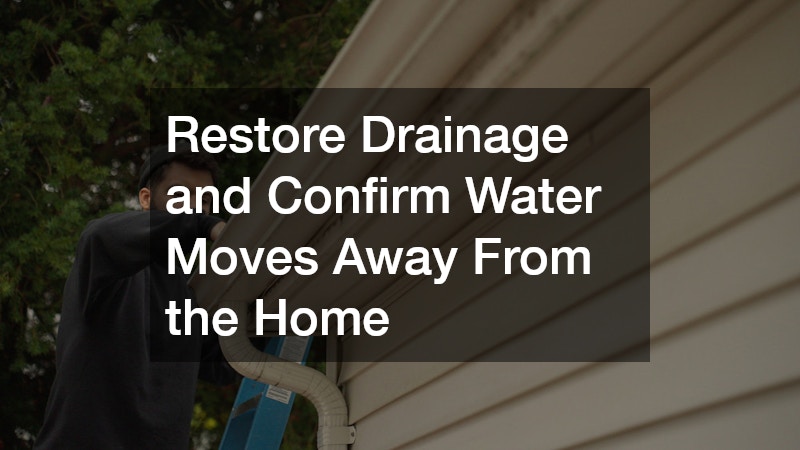
Gutters and downspouts are easy to overlook when more dramatic storm damage is present, but they play a major role in protecting the home. Prompt gutter installation or replacement may be necessary when bent or detached sections direct water behind siding, beneath roofing materials, across walkways, or toward the foundation.
Inspect the system from the ground and look for:
- Sections pulling away from the fascia
- Bent or crushed channels
- Loose hangers
- Separated seams
- Missing end caps
- Damaged downspouts
- Sagging sections
- Water stains on siding
- Soil erosion near discharge points
- Overflow marks beneath the roofline
Minor gutter repairs may be appropriate when damage is limited to a loose bracket, leaking seam, disconnected outlet, or small section. Full replacement may be more practical when long runs are crushed, twisted, detached, or improperly pitched.
Schedule drainage work after major roof repairs whenever possible. Roofing crews use ladders, remove materials, and drop debris, all of which could damage a newly completed system. The correct system depends on roof area, roof pitch, rainfall intensity, valley locations, and the number of downspouts. A large, steep roof may move water faster than an undersized system can manage. Ask the contractor to inspect fascia and soffit materials before attaching new components. Hidden rot or loosened boards should be repaired first. Fastening new gutters to damaged wood can lead to sagging or detachment.
Downspouts should carry water away from the foundation. Extensions, splash blocks, or underground drainage may be necessary where discharge creates pooling or erosion. After the work is complete, ask the contractor to test the system with water. Observe whether water flows toward the outlets, whether seams leak, and whether downspouts drain freely.
A final inspection after the next significant rainfall is also valuable. Walk around the property and check for overflow, dripping behind the gutter, pooling near the foundation, washed-out landscaping, or water crossing walkways. Drainage problems may also reveal issues with roof valleys, drip edge, flashing, or underground pipes. Correcting those conditions promptly can help prevent basement moisture, siding deterioration, soil erosion, and foundation concerns.
Build a Coordinated Recovery Plan

Recovering from storm damage often involves several professionals, multiple inspections, insurance communication, material decisions, and changing schedules. The process becomes easier when each stage is documented and completed in a logical order.
Begin with immediate safety concerns and temporary protection. Then verify credentials, compare detailed estimates, review materials, and coordinate the sequence of work. Hazardous trees should be addressed before crews begin working beneath them, major structural and water-entry problems should be repaired before cosmetic improvements, and drainage systems should be completed after the roof and exterior surfaces are secure.
Keep copies of inspection reports, contracts, permits, photographs, invoices, warranties, payment records, and correspondence. These documents may be useful for insurance questions, future maintenance, home sales, or warranty claims.
Do not allow urgency to replace careful decision-making. A qualified professional should be willing to explain the damage, describe the proposed solution, answer questions, and put commitments in writing. By choosing experienced specialists and coordinating their work carefully, homeowners can restore the property more effectively and reduce the chance that hidden storm damage will cause larger problems later.